Trump Just Undid Four Years of Biden’s Alaska Oil Policy in Under One
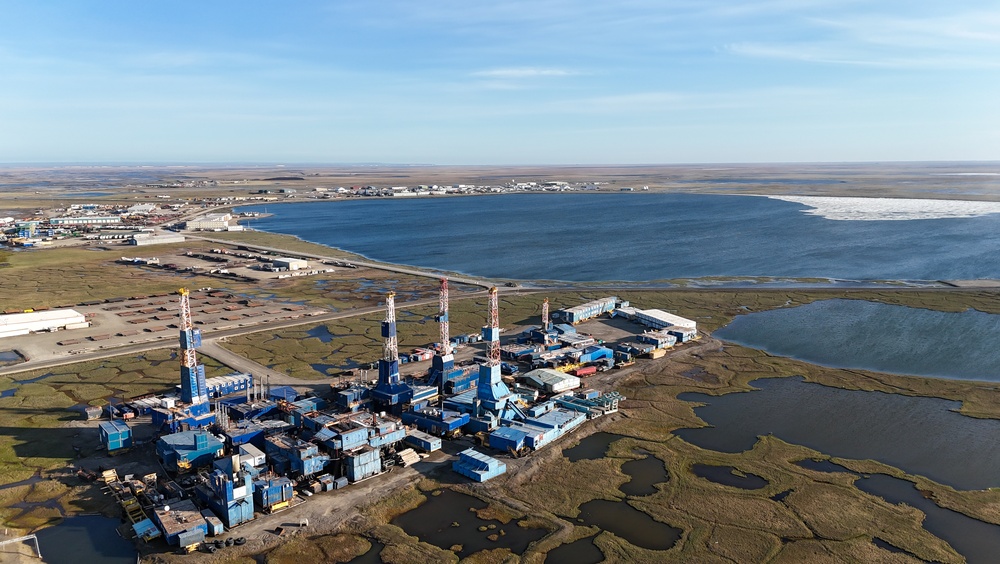
Biden built a four year wall around Alaska's oil fields.
Trump's Interior Department just knocked that wall down in under a year.
What Burgum's team actually reversed makes Biden's four years look like a rounding error.
Burgum Tore Down Every Biden Restriction in Under a Year
For four years, Alaska watched Washington treat its oil fields like a crime scene.
The Biden administration pushed more than 60 executive orders and actions targeting the state's energy economy.
Alaskan officials called it a "lock-up" of their entire resource base.
The centerpiece was the Arctic National Wildlife Refuge.
Trump's first administration opened the Coastal Plain to leasing and sold tracts in 2021.
Biden's Interior Department suspended those leases, then canceled what was left, claiming the original program had deficiencies.
Then Biden moved on the National Petroleum Reserve-Alaska, a 23 million acre reserve holding an estimated 8.7 billion barrels of oil.
In 2024, his administration declared 13 million of those acres "special areas" limiting future leasing, while keeping outright leasing prohibitions on another 10.6 million acres.
Burgum tore all of it down.
Last November, his department rescinded the Biden-era restrictions on the Petroleum Reserve outright, calling the action a restoration of "common-sense management" in service of "American Energy Dominance."
Weeks earlier, Interior had already opened the entire 1.56 million acre Coastal Plain of the Arctic Refuge back up to leasing.
Burgum did not mince words about why the reversal was necessary.
"The Biden administration sanctioned Alaska more than they sanctioned Iran," he said, pointing out that the restrictions eased the moment Trump took office.
Dan Sullivan and Mary Peltola Are Fighting Over Who Saved Willow
ConocoPhillips, which holds 1.8 million acres of leases across the North Slope, had already sued over the 2024 rule.
The company filed applications through the summer to drill test wells and run seismic surveys near its Willow project, the one Interior approved back in 2023 only under heavy pressure from Alaska's bipartisan delegation.
North Slope Borough Mayor Josiah Patkotak said residents should be "partners, not afterthoughts" when Washington decides the future of their land.
Alaska's oil numbers back up the outrage.
The state once supplied a quarter of America's crude, peaking near 2 million barrels a day in the late 1980s.
Years of federal restriction knocked that down hard.
Alaska now produces just over 420,000 barrels a day, and the Energy Information Administration forecasts 13 percent growth in 2026 alone.
State projections show the Petroleum Reserve climbing from 15,800 barrels a day to 139,600 barrels a day by 2033 now that the restrictions are gone.
Willow itself could hit 180,000 barrels a day at peak production.
ConocoPhillips estimates it will send $8 billion to $17 billion to federal, state, and local governments over its lifetime.
That math is now center stage in Alaska's Senate race.
Republican incumbent Dan Sullivan is in a toss-up fight against Democrat Mary Peltola, and both are racing to claim credit for keeping Willow alive.
Sullivan introduced legislation in September to lock in Coastal Plain leasing permanently, and Senate Democrats killed it.
Rep. Harriet Hageman summed up what four years of Biden energy policy did to a state that runs on oil.
"Both Obama and Biden totally destabilized that industry," she said, accusing Democrats of trying to shut producers down outright.
Trump took the fight straight to Wasilla, headlining a rally alongside Sullivan, Rep. Nick Begich, and the state's Republican leadership roughly three weeks before Election Day.
The Receipts Behind a Four Year Reversal
Iran still moves oil through sanctioned shadow fleets and gray-market buyers despite decades of American penalties.
Alaska, an American state full of American citizens, faced a tighter federal leasing freeze than that for four straight years.
That is how bad the damage actually was, and the numbers above are what it took to undo it.
Washington has tried to make bans like this permanent before.
In 2016, Obama invoked Cold War-era federal lands authority to withdraw Arctic and Atlantic waters from drilling, a move widely described at the time as built to survive any future president who tried to touch it.
The first Trump administration tried to reverse that specific offshore withdrawal immediately and got tied up in federal court for years over it.
Burgum skipped that fight entirely this time.
He went after the onshore leasing rules and management plans instead, the ones governing the Petroleum Reserve and the Coastal Plain, and rewrote them through the same regulatory process Biden used to write them in the first place.
A rule built on executive authority can get rewritten by the next administration with executive authority of its own, no judge required.
Biden's team fired off more than 60 separate actions across four years trying to wall off Alaska's resources for good.
It cost the state lost production, jobs that never got created, and a Petroleum Reserve that sat on 8.7 billion barrels of oil while Washington argued about consultation processes.
Energy workers already make up 8 percent of Alaska's total employment, and that number climbed even through the restriction years.
Alaska didn't need a bailout or a subsidy.
It needed Washington to stop treating it like a hostile regime.
Sources:
- Rachel Schilke, "Trump Proves in Alaska He Can Undo Biden's Energy Damage in Half the Time," Just the News, October 14, 2026.
- Secretary Doug Burgum, "The Biden Administration Sanctioned Alaska More Than They Sanctioned Iran," U.S. Department of the Interior, November 2025.
- Fox Business, "Biden Admin Sanctioned Alaska More Than Iran, Russia: Doug Burgum," Fox Business, November 2025.
- Senator Dan Sullivan, "Sullivan Condemns Biden for Sanctioning Alaska More Than Terrorist Regimes Like Iran," Office of Senator Dan Sullivan, 2025.
- Senator Lisa Murkowski, "Delegation Slams Biden Decisions to Further Restrict, Deny Resource Development in Alaska," Office of Senator Lisa Murkowski, 2025.
- U.S. Energy Information Administration, "Alaska State Energy Profile," U.S. Energy Information Administration, 2026.