Bridgestone Finally Perfected The Tire That Never Goes Flat but There’s a Catch Leaving Drivers Deflated for Now
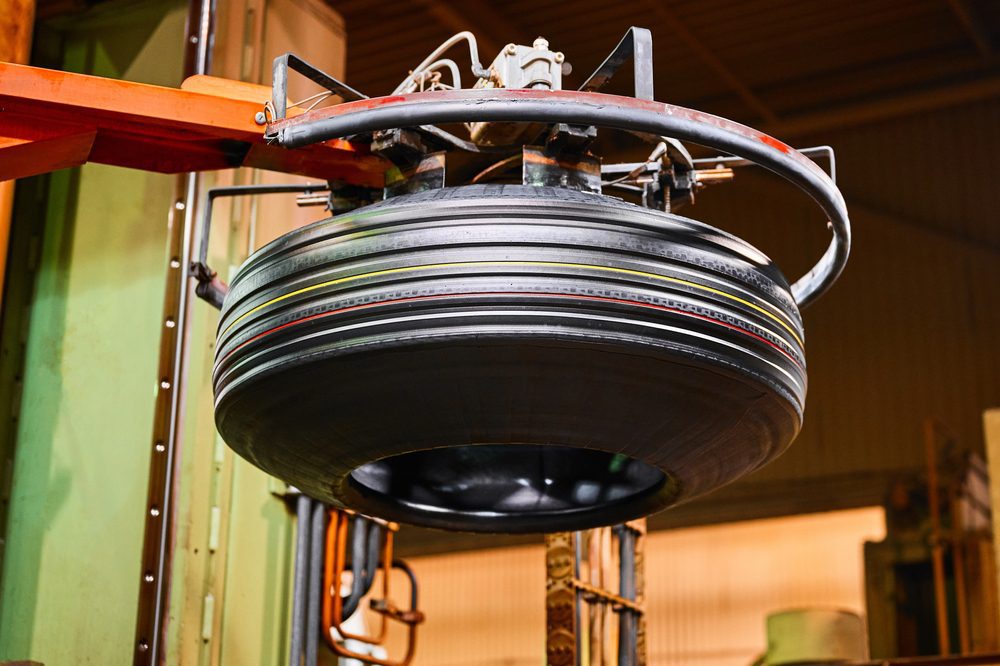
Car companies have chased a tire that never goes flat for almost twenty years without ever actually delivering one.
Bridgestone just announced its version is finally hitting real roads after nearly two decades of development.
The reason Bridgestone picked that vehicle says everything about how far the technology still has to go.
Eighteen Years And Three Generations Led To This One Rollout
Bridgestone's very first airless tire prototype rolled out of the lab in 2008.
The company unveiled a second generation in 2013.
It rolled out a third generation in 2023, built around a completely different idea than the first two.
Engineer Masaki Ota said the team spent years trying to make the tire material harder so it could bear real weight.
That approach kept failing.
The breakthrough came when Bridgestone stopped fighting the material and started working with it.
The team switched to a flexible thermoplastic resin arranged in spokes that spread the load evenly across the whole tire.
A thin layer of rubber covers the spokes where they meet the road, so the tire still grips like a normal one.
Bridgestone calls the finished product AirFree, and this week the third generation officially became a commercial product for the very first time.
The First Buyer Is Not A Car Company
Bridgestone did not put its new tire on a Camry or an F-150.
It put the tires on a fleet of self-driving electric vehicles shaped like an oversized golf cart with a roof.
Those vehicles now shuttle elderly residents around Higashiomi, a mountainous Japanese city where the population skews older every year.
The tires cap out around 12 miles per hour, which is fine for a slow ride through town and completely disqualifying for anything on a highway.
Bridgestone painted the tires an attention-grabbing shade called Empowering Blue, aimed at making the slow-moving vehicles stand out to other drivers day and night.
Bridgestone hasn't said when – or if – these tires go into full production, and the company is reportedly still working out whether to sell them outright or fold them into a recycling-based service instead.
https://x.com/asahi/status/2074706051367387594“>https://x.com/asahi/status/2074706051367387594
Nikkei Asia reporters who rode in one of the vehicles clocked a top speed near 20 kilometers per hour and said it handled hills without any trouble.
Bridgestone is not the only company that made this promise, but it is the only one that got close.
Michelin's own UPTIS project, built with General Motors, missed its 2024 market deadline by two years and counting.
Michelin still sells a version of its airless idea called Tweel, but only for ATVs, golf carts, and ride-on mowers – the exact low-speed category Bridgestone just entered.
Industry researchers have pegged the global airless tire market at close to 78 billion dollars by 2028, and every major tire maker on the planet wants a piece of that number before their rivals lock it up.
Higashiomi did not get picked by accident either.
The city sits in a mountainous stretch of Shiga Prefecture, exactly the kind of aging, hard-to-service community Bridgestone says this technology was built to help.
A slow, self-driving cart that never gets a flat tire and never needs a driver solves two problems for the city at once.
Eighteen Years Got Bridgestone A Golf Cart Not A Revolution
Landing on a golf cart after all that work tells you exactly how brutal this engineering problem really is.
Air has done the job of holding up your car for over a century because it is cheap, it is light, and it is genuinely hard to beat as a shock absorber.
Bridgestone had to admit that making the material tougher was the wrong fight before it found the right one, and that kind of course correction rarely happens fast in a company this size.
The real story here is not a flat tire revolution.
It is a company that spent nearly two decades solving one of the hardest problems in the tire business and then found the smallest possible use for the answer.
Michelin still hasn't matched that for an actual passenger car, so Bridgestone deserves real credit for building something that works.
But building something real and building something that changes anything for the average driver are two very different accomplishments.
Right now, Bridgestone has only cleared the first bar.
Sources:
- Nikkei Asia Staff, "Bridgestone's airless tires hit streets of Japan after nearly 2 decades," Nikkei Asia, July 8, 2026.
- Jack Quick, "Bridgestone tries to reinvent the wheel with new airless tyre that will never puncture, but this is why it won't appear on your next car," CarsGuide, July 8, 2026.
- Brad Anderson, "Bridgestone's Airless Tires Finally Hit The Road, But They Top Out At 12 MPH," Carscoops, July 2026.
- Bridgestone Corporation, "Bridgestone's Non-Pneumatic Tire Technology Air Free Concept," Bridgestone.com.