Ukraine’s Drone Attack on an Exxon Tanker Just Backfired and Forced Kazakhstan to Make an Unthinkable Choice
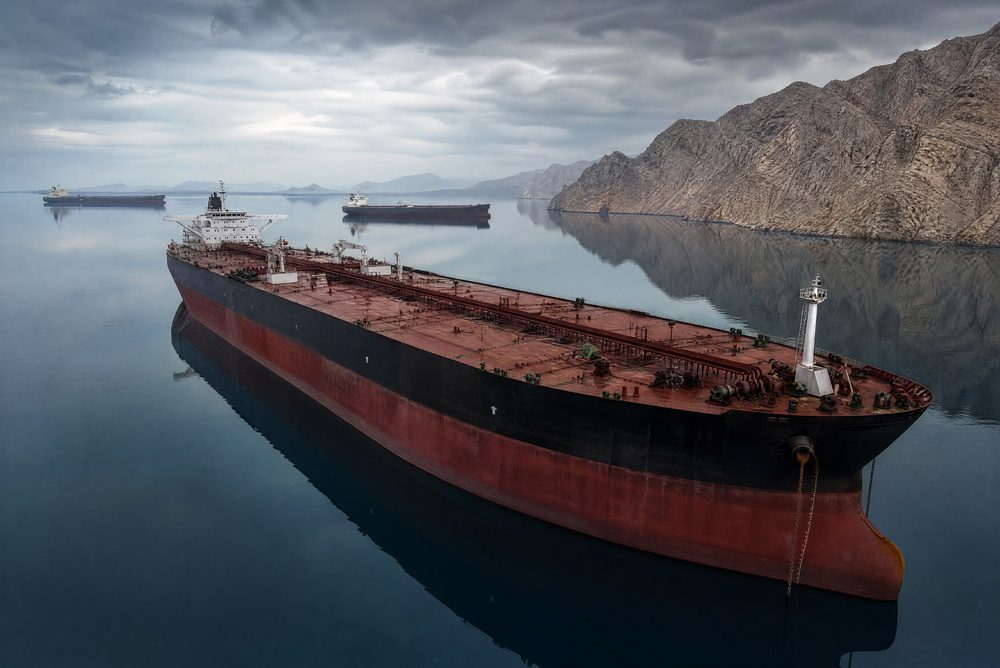
A Ukrainian drone strike set a Chevron-chartered oil tanker ablaze in the Black Sea.
That attack was the fourth tanker hit in four days, and Kazakhstan had finally seen enough.
Now Kazakhstan is responding after the foreign drones Americans pay for hit the oil flow in a market millions of Americans feel every time they fill up.
Four Attacks in Four Days Break Kazakhstan's Patience
Kazakhstan is set to stop piping crude to Russia's Black Sea coast, and the reason is simple.
Tanker crews are too scared to show up.
Bloomberg confirmed the halt begins at the Novorossiysk terminal, run by the Caspian Pipeline Consortium, and it covers roughly 1.6 million barrels a day.
That is not a rounding error.
It is the artery that carries 80 percent of Kazakhstan's oil to the rest of the world.
Drones hit the empty Nordic Zenith on July 17 as the ExxonMobil-chartered tanker closed in on the terminal.
Drones then hit two more ships, the Chevron-chartered Asia and the Nissos Ios, as both loaded crude at the moorings on July 19.
The Asia caught fire.
Crews and CPC emergency teams put it out before anyone was hurt.
A fourth strike hit the tanker Nelsa on July 20, and loadings that had briefly resumed got shut down all over again.
Kazakhstan's foreign ministry did not mince words, warning it would pursue "all rights available under international law" to seek compensation for the damage.
Russia piled on too.
Foreign Ministry spokeswoman Maria Zakharova said Moscow stands with Kazakhstan's "decisive condemnation of this crime," and accused Ukrainian President Volodymyr Zelensky's government of trying to rattle global oil markets on purpose.
American Oil Giants Are Directly in the Blast Radius
This is not some distant border skirmish.
Chevron and ExxonMobil are major shareholders in the consortium, and their chartered ships are the ones taking the hits.
This is the same pipeline pattern Ukraine has run before.
A November 2025 drone strike knocked out a mooring at the same terminal, and January brought more tanker attacks that cratered Kazakh oil output by roughly 35 percent in a matter of days.
Local experts estimated losses from that January round alone at up to 1.5 billion dollars.
The oil moving through those moorings comes straight from the Tengiz and Kashagan fields, the same fields Chevron and ExxonMobil spent decades and billions of dollars developing.
Now it is happening again, only faster and closer together.
CPC itself called this "the fifth act of direct aggression against a purely civilian CPC facility."
No one, including Ukraine, has publicly claimed responsibility for these specific strikes.
Ukraine has spent over a year hammering Russian refineries and export terminals, and Russian refining output has fallen to its lowest level in more than two decades.
But Kazakhstan is not Russia.
Kazakhstan is a bystander whose own oil, on ships chartered by American companies, keeps getting caught in the crossfire.
Torching a tanker chartered by Chevron while it loads a bystander nation's crude is not precision warfare.
It is a bystander's oil route getting treated as an acceptable loss, and American company assets are paying for that decision alongside Kazakhstan.
President Trump has pushed hard to end the war outright, using sanctions pressure and direct diplomacy with both sides to try to keep energy prices from spiraling on American families.
Gas prices have already pushed past four dollars a gallon as oil spiked more than 15 percent in a single week.
Every tanker that burns in the Black Sea makes that fight harder.
Analysts at HSBC have flagged the Ukraine war as a growing driver of oil prices, separate from the chaos already rattling the Middle East.
Two war zones, one oil market, and American drivers stuck paying for both.
The Caspian Pipeline Consortium moves more than 1 percent of the entire world's oil supply through a single stretch of Russian coastline.
A chokepoint that size does not survive attacks like these for long.
Kazakhstan has leaned on the Baku-Tbilisi-Ceyhan line before, rerouting crude through Azerbaijan and Georgia to bypass Russia entirely, but that route cannot absorb anywhere near 1.6 million barrels a day.
If Novorossiysk stays dark, expect the price at your local gas station to notice before the summer is over.
Zelensky wanted to squeeze Putin's war chest.
Instead he is squeezing Chevron, ExxonMobil, and every American who just wants an affordable tank of gas.
Sources:
- Tyler Durden, "Kazakhstan Stops Piping Oil To Black Sea After Spate Of Ukraine Drone Tanker Strikes," ZeroHedge, July 21, 2026.
- Reuters, "Kazakhstan criticises Ukraine over drone attack on CPC oil terminal," Reuters, November 30, 2025.
- Reuters, "Exxon-chartered oil tanker attacked by drones near Black Sea terminal," Reuters, July 18, 2026.
- Bloomberg, "Kazakhstan to Stop Piping Oil to Black Sea After Tanker Attacks," Bloomberg, July 21, 2026.
- Euronews, "Four drone strikes in four days hit tankers carrying Kazakhstan's oil," Euronews, July 21, 2026.
- NBC News, "Gas prices hit $4 again after oil soars more than 15% in a week," NBC News, July 2026.
- OSW Centre for Eastern Studies, "Ukrainian attacks on the CPC oil pipeline: outlook for Kazakhstan's oil sector," OSW, February 4, 2026.