Trump’s Treasury Just Clobbered Bank of America With a Massive Fine Biden’s Regulators Let Slide
Bank of America buried more than five billion dollars in suspicious money and never told regulators.
Chinese laundering networks and suspected border cartel activity used that silence for years.
Then Scott Bessent's Treasury dropped the fine Biden's regulators never had the nerve to impose.
BofA Admitted It Willfully Broke a Law Written in 1970
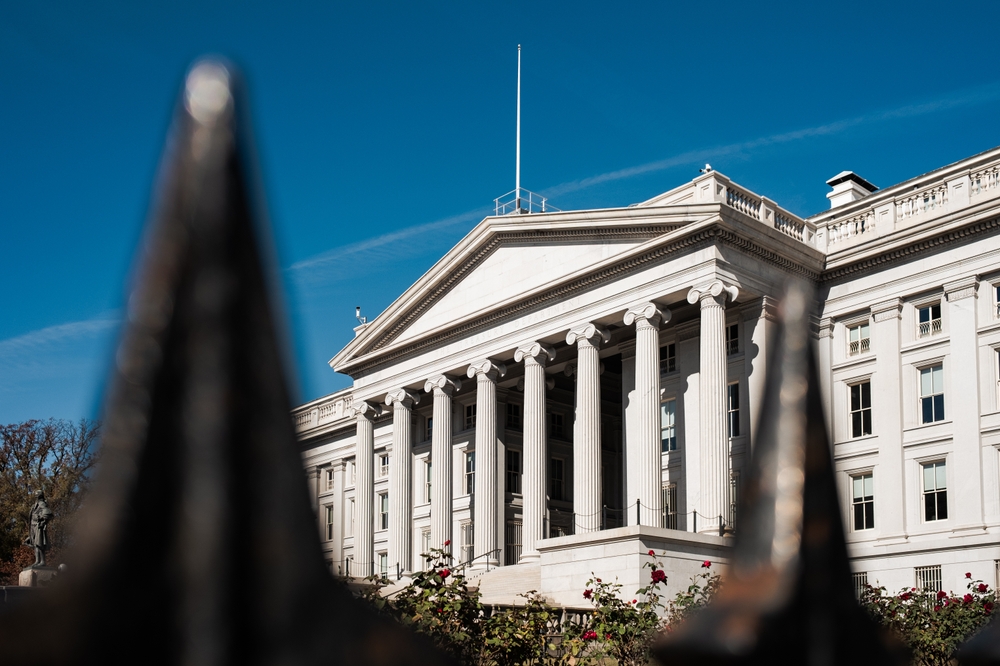
The Treasury Department announced a $1.2 billion penalty against Bank of America on October 13, 2026, the third-largest enforcement action in the department's history.
Bank of America admitted it willfully violated the Bank Secrecy Act, the decades-old law that exists specifically so banks cannot plead ignorance when dirty money moves through their accounts.
More than $5 billion in transactions that should have triggered a federal alert instead went straight past Bank of America's compliance desk without a single report to Washington.
Investigators found links to Chinese money laundering networks.
They also found suspected illicit financial activity running along the U.S.-Mexico border.
The Office of the Comptroller of the Currency collected $750 million of that total, more than it has ever extracted from a single bank in its history.
A separate $11.6 million went to the Office of Foreign Assets Control to settle sanctions violations tied to Iran, Russia, narcotics trafficking, and global terrorism financing.
Those are not abstract categories on a compliance spreadsheet.
Iran and Russia sanctions exist to choke off hostile regimes from the American financial system.
Narcotics and terrorism financing controls exist to stop cartels and terror networks from laundering cash through accounts that look ordinary on paper.
Bank of America admitted that its systems let that activity pass through undetected and unreported.
Treasury Secretary Scott Bessent did not mince words.
"When a bank of this size fails its anti-money laundering and sanctions obligations, the consequences extend far beyond its own walls," he said.
"Today's actions send a clear message that even the biggest financial institutions are not above the law," Bessent said.
Michael Hsu Already Caught This in 2024 and Walked Away With No Fine
Here is the part Bank of America would rather nobody notice.
Michael Hsu, the man Biden left running the OCC as acting comptroller of the currency, already knew about these failures.
Hsu's office issued a cease-and-desist order against Bank of America in December 2024, pointing to slow-walked suspicious activity reports and due diligence holes the bank had identified on its own and simply never patched.
That order carried no monetary penalty whatsoever.
Hsu had the authority to fine Bank of America right then, with the underlying failures already documented in the order he signed.
He signed a warning letter instead.
Bank of America told investors at the time it did not expect the matter to carry any material financial impact, and Hsu gave the bank every reason to believe that.
It took Scott Bessent's Treasury to turn Hsu's toothless warning letter into a $1.2 billion bill.
Bank of America is the nation's second-largest bank, and the kind of institution Hsu's OCC had historically treated as too big to really punish.
This time the pipeline connecting Chinese laundering operations and suspected cartel cash to one of America's largest financial institutions actually cost the institution something, because the people enforcing the law changed.
The Fentanyl Money That Finally Made Washington Serious About Bank Compliance
This is not the first time a major bank got caught running dirty money and only faced real consequences years later.
TD Bank's money laundering scandal involved $653 million tied directly to fentanyl trafficking proceeds.
That case ended with more than $3 billion in penalties and federal regulators physically limiting how large TD's American retail business was allowed to get.
Go back further and BNP Paribas paid nearly $9 billion in 2014 for funneling money through sanctioned regimes, the largest criminal fine in American history at the time.
The pattern keeps repeating because the incentives never changed until now.
Cartels and foreign laundering networks need exactly one thing to move money at scale: a bank willing to look the other way, even accidentally, for long enough.
Bessent's Treasury just told every bank on Wall Street that era is over, and the next one caught moving cartel money or sanctioned cash will not get a warning first.
That message matters most on the border, where fentanyl profits need exactly the kind of blind eye Bank of America's compliance program apparently provided for years.
A bank that cannot see five billion dollars in suspicious transactions is a bank cartels can use like a wire transfer service, and Washington just made that a $1.2 billion mistake instead of a free one.
Sources:
- American Greatness Staff, "Treasury Hits Bank of America With $1.2 Billion Fine Over Money Laundering, Sanctions Violations," American Greatness, October 14, 2026.
- Fox Business, "Bank of America Hit With $1.2 Billion Fine," Fox Business, October 13, 2026.
- Office of the Comptroller of the Currency, "OCC Issues Cease and Desist Order Against Bank of America," U.S. Department of the Treasury, December 23, 2024.
- Office of the Comptroller of the Currency, "Michael J. Hsu, Acting Comptroller of the Currency," U.S. Department of the Treasury, 2024.
- U.S. Department of the Treasury, "Treasury Announces Enforcement Action Against Bank of America," U.S. Department of the Treasury, October 13, 2026.
- U.S. Department of Justice, "BNP Paribas Agrees to Plead Guilty and to Pay $8.9 Billion for Illegally Processing Financial Transactions," U.S. Department of Justice, June 30, 2014.