Trump Just Waived the Law That Was Quietly Draining Your Wallet for Decades
Americans blamed Biden for high fuel prices for four straight years.
Nobody in Washington ever mentioned the shipping law making everything even more expensive.
The waiver Trump just signed shows exactly how much that law was costing you.
A 1920 Law Still Controls Every Ship Between American Ports
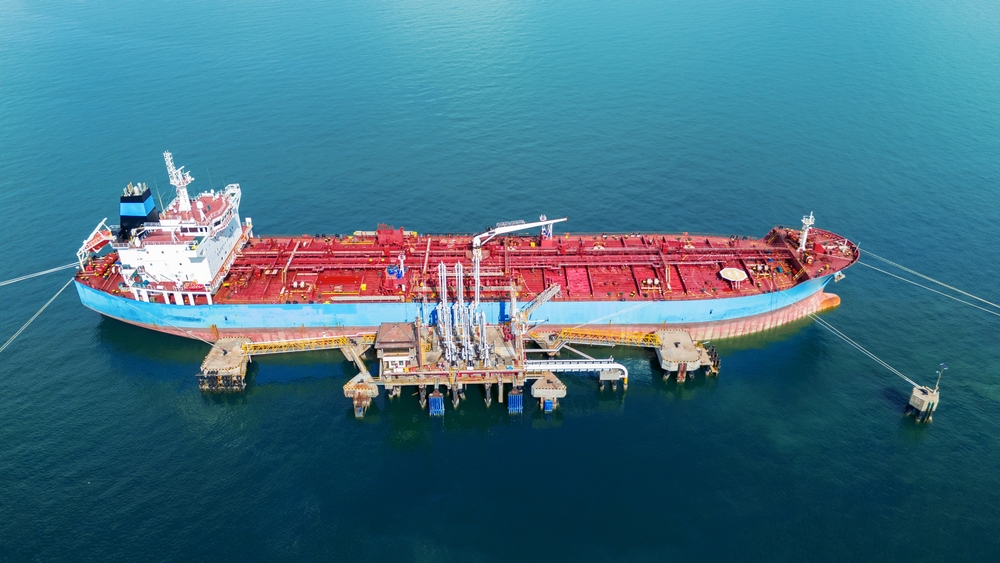
The Jones Act has been on the books since 1920.
It says any cargo ship moving between two American ports has to be built in America, owned by Americans, and crewed at least 75 percent by Americans.
Sounds patriotic.
Here's what it actually does.
An American-built cargo ship costs $190 million to $250 million.
The same ship built overseas costs about $30 million.
It costs roughly three times more to ship oil from Texas to the Northeast than to bring it in from Africa.
The entire country now has fewer than 100 oceangoing ships left that even qualify under this law.
Roughly 300 American shipyards have closed their doors since the early 1980s.
The law that was supposed to save American shipbuilding helped kill it instead.
Fuel Started Moving to Places That Went Without It for Years
In March 2026, the Trump administration suspended the Jones Act for energy and fertilizer shipments.
It was the longest waiver in recent memory, and the administration just extended it another 90 days with tighter conditions attached.
Look at what happened the moment Washington got out of the way.
The West Coast, Alaska, and Hawaii pulled in nearly 14 million barrels combined, close to 170 percent of their normal yearly average.
Puerto Rico took in more mainland fuel over that stretch than in any single full year going back to 2015.
Brand new shipping routes opened almost overnight, Gulf Coast fuel headed to Hawaii, New Jersey jet fuel headed to California, propane running straight to Puerto Rico.
Entire regions of this country had effectively been rationed by a shipping law nobody voted on in over a century.
None of that fuel moved because Washington passed a new law.
It moved because Washington finally stopped enforcing an old one.
The People Fighting to Keep You Paying More
You would think a policy that gets cheaper fuel to American families faster would be popular.
Shipyards and maritime unions launched national ad campaigns against the waiver anyway.
California Rep. John Garamendi has been one of the loudest voices demanding Washington reverse course.
He says the waiver "will create an unequal playing field putting international ships above American vessels."
Garamendi also blames high gas prices entirely on "Trump's war of choice in Iran."
He never once mentions that his own protected shipping law had been adding hundreds of millions in costs long before Iran was ever a headline.
They are not fighting for national security.
They are fighting for a monopoly that guarantees them customers who have no other legal option.
The Jones Act has always survived on the same trick.
It gets relabeled as vital to national defense every time someone tries to touch it.
Then it gets waived without fanfare by administration after administration the moment a shortage makes the cost too obvious to ignore.
Trump's team didn't wait for a disaster to do the math.
That is the difference.
Every administration before this one treated the Jones Act like a hostage situation.
They waived it only after Americans were already suffering somewhere in the country.
This one decided the suffering wasn't necessary in the first place.
Sources:
- Veronique de Rugy, "Americans Get Rare Break From Quietly Expensive Law," PJ Media, August 13, 2026.
- "Rust Buckets: How the Jones Act Undermines U.S. Shipbuilding and National Security," Cato Institute.
- "The Jones Act Paradox: Why Is a Law That Is Deemed Essential So Frequently Waived?," National Taxpayers Union Foundation.
- "Shipyards, Refiners Disagree With Extension of Jones Act Waiver," The Hayride, August 2026.
- Rep. John Garamendi, official statement on the Jones Act waiver, garamendi.house.gov, 2026.