Mikaela Shiffrin Was Impaled by a Ski Gate But She Just Did Something Nobody Expected
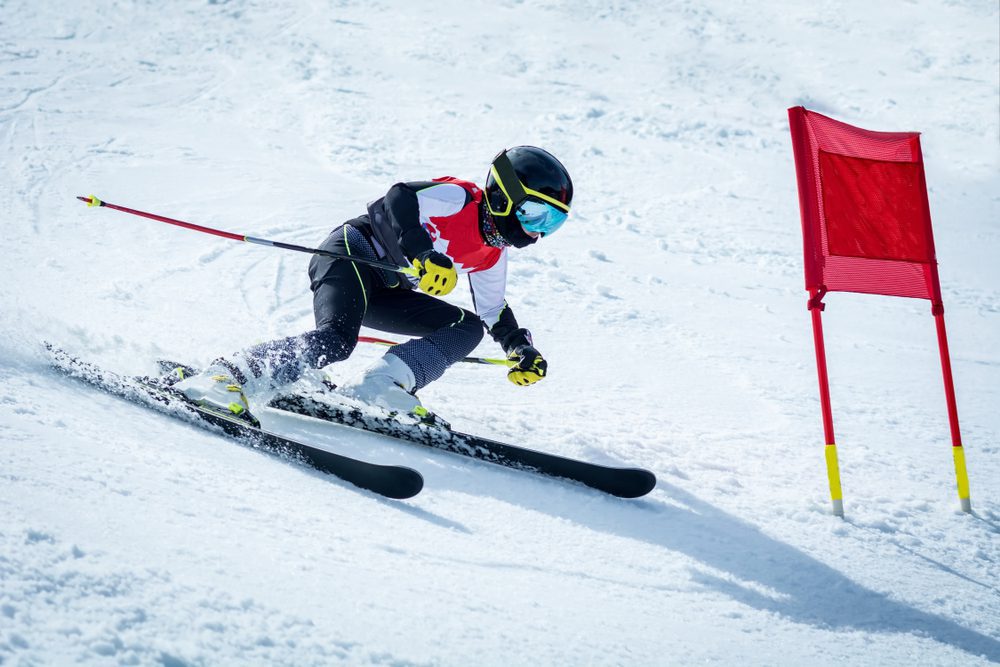
Fourteen months ago, Mikaela Shiffrin was lying in the snow at Killington, Vermont, with a puncture wound in her abdomen – one millimeter from her colon – and no idea what had put it there.
The doctors told her she was lucky to be alive.
What she did Wednesday morning on a mountain in Italy will make every single one of your grandkids talk about her for the rest of their lives.
From a Stab Wound to the Olympic Podium
The crash that nearly ended everything happened November 30, 2024.
Shiffrin was chasing her 100th World Cup victory when her ski caught an edge and she tumbled into two gates and a protective fence at high speed.
What she didn't know in those first terrifying moments was that something – her ski, a gate piece, nobody is completely sure – had punched a seven-centimeter hole straight through her abdominal wall.
It missed her colon by one millimeter.
Surgeons went in twice to close and drain the wound.
She couldn't laugh without pain. She couldn't sneeze. She couldn't rise from a chair.
Her physical therapist had to call the training staffs of the Los Angeles Angels and the Edmonton Oilers – baseball and hockey players get oblique injuries, skiers almost never do – just to figure out how to rebuild the muscles that power every single turn on a ski slope.
https://twitter.com/MikaelaShiffrin/status/2018078869392175599
And then the mental part started.
Shiffrin admitted she developed full-blown PTSD from the crash – flashbacks, intrusive images, a frozen feeling in her body the moment she got back on a giant slalom course.
"It was almost as though I was no longer in control of my body," she wrote in a public letter about her recovery.
The Comeback Nobody Saw Coming
She returned to racing in January 2025 – slalom first, where she felt safer – and by February had won her historic 100th World Cup title.
But the PTSD lingered in giant slalom.
She pulled out of the World Championships GS event last February, writing that "coming to terms with how much fear I have doing an event that I loved so dearly only two months ago has been soul-crushing."
She fought through it race by race, therapy session by therapy session.
She arrived in Cortina, Italy, for the 2026 Olympics and the first two events were rough.
Eleventh place in giant slalom. Fifteenth in the slalom leg of the team combined.
She was one race away from leaving Italy without a single medal – eight years after her last Olympic podium, two straight Games with nothing to show.
She Left Them All 1.5 Seconds Behind
Wednesday's slalom on the Tofane course was her last shot.
Shiffrin blazed through the first run on the steep Tofane course and built a 0.82-second lead over the entire field.
Four hours passed. She stood at the start gate again, knowing she was 51 seconds away from ending the drought.
The skier immediately before her – Germany's Lena Duerr, sitting in second place – hooked the first gate and stopped within seconds.
Shiffrin went.
She crossed the finish line in a combined time of 1:39.10 – a full 1.5 seconds ahead of silver medalist Camille Rast of Switzerland.
The winning margin was the largest in any Olympic Alpine skiing event since 1998.
She pumped her fists. Then she hugged her mother and cried.
"Honestly, the skiing is what I cared about," she told NBC. "Of course, a medal and gold – that's a dream come true."
What Makes This Story One for the Ages
She first won Olympic slalom gold as an 18-year-old in Sochi in 2014 – the youngest slalom champion in Olympic history.
Twelve years later, she's the oldest American woman ever to win Alpine skiing gold.
She's now only the second skier in history, male or female, to win Olympic slalom gold twice – joining Switzerland's Vreni Schneider from 1988 and 1994.
Her 108 World Cup wins – 71 of them in slalom alone – already make her the most decorated alpine skier who ever lived.
But the numbers don't tell you what this actually was.
This was a 30-year-old woman who survived a near-fatal crash, battled PTSD that made her freeze on the same course where she'd dominated for a decade, rebuilt herself muscle by muscle and thought by thought, showed up at the Olympics after two events that went nowhere – and then absolutely destroyed the world's best skiers in her favorite race by a margin that hadn't been seen in 28 years.
That's not a statistic. That's a character.
America makes those.
Sources:
- Associated Press, "US Star Mikaela Shiffrin Wins Gold in Slalom to Break 8-Year Olympic Drought," Today/NBC, February 18, 2026.
- Alyssa Roenigk, "After days of disappointment, Mikaela Shiffrin storms to gold in slalom," NBC News, February 18, 2026.
- Vermont Public, "Mikaela Shiffrin healed from puncture wound suffered in ski crash at Killington, will race next week," January 23, 2025.
- Powder Magazine, "Mikaela Shiffrin Writes About Intense Battle With PTSD," May 30, 2025.
- ESPN, "Mikaela Shiffrin wins slalom to snap 8-year Olympic drought," February 18, 2026.
- Olympics.com, "Winter Olympics 2026: Mikaela Shiffrin soars to first gold of Games in women's slalom," February 18, 2026.