Dodge Ditched the Daytona Electric Charger for Real Gas Power and the Numbers Just Came Back
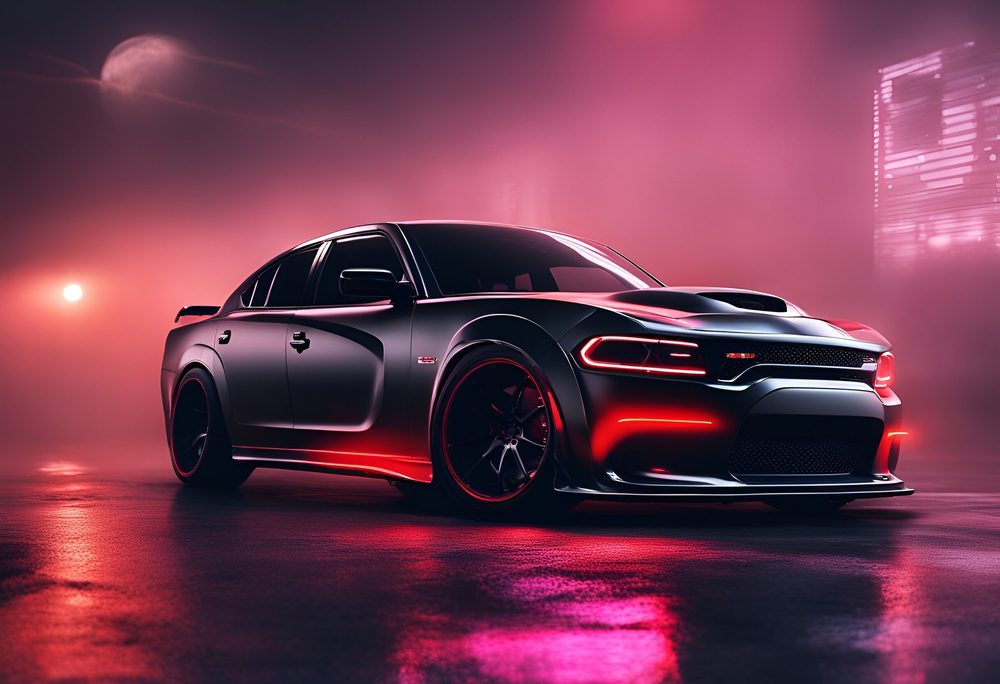
Donald Trump ripped away Joe Biden's $7,500 electric vehicle tax credit for good last October.
Dodge Charger sales numbers just proved what happens once that subsidy disappears completely.
The real reason gas sales exploded goes even deeper than the tax credit alone.
The Numbers Dodge Didn't Want You To See
Stellantis bet the entire Charger nameplate on the idea that muscle car buyers wanted a battery.
They were wrong.
Dodge sold 2,911 gasoline Chargers in the second quarter of 2026.
That's up 404 percent from just 578 a year earlier.
Year to date, gas Charger sales hit 4,583 units, a 181 percent jump over 2025.
The electric Charger Daytona went the opposite direction.
Dodge moved only 294 electric Chargers in Q2, an 88 percent collapse from 2,352 a year ago.
Year to date, EV Charger sales sit at just 534 units, down 88 percent from 4,299.
That swing lines up almost exactly with Washington pulling the plug on the EV subsidy.
The $7,500 federal tax credit for electric vehicles disappeared after September 30, 2025, right as gas Charger sales took off.
Joe Biden pushed the same electric vision nationally for years, once touring a Detroit auto show to promise "the great American road trip is going to be fully electrified."
Donald Trump killed that credit in his first year back and gutted California's authority to force zero-emission sales quotas on automakers nationwide.
Dodge's own sales chart just showed what buyers actually choose once nobody subsidizes one option and nobody bans the other.
Meanwhile in Michigan, Whitmer's own push for an all-electric government fleet has quietly stalled.
Records obtained by the Detroit News show the state had bought only 41 electric vehicles by early this year, spending $1.3 million on two dozen of them alone.
Dodge buyers in that same state moved thousands of gas Chargers instead.
Ford CEO Jim Farley already warned this was coming.
Farley told investors EV sales could fall to 5 percent of the market from the 10 to 12 percent range carmakers were counting on.
He said buyers simply won't pay $75,000 for a car just because it skips the gas station.
Dodge is living that warning in real time.
The Hemi Is Coming Back To Finish The Job
Here's the part that should really worry Stellantis executives.
Gas Chargers are crushing the EV by a landslide, and buyers still can't even get the engine they actually want.
Today's gas Charger runs on a twin-turbo Hurricane inline-six, not the supercharged Hemi V8 that built the Charger's reputation.
Plenty of Mopar loyalists never accepted a six-cylinder as a real replacement for a V8.
They bought the six anyway rather than touch the EV.
Dodge has already confirmed the Hellcat V8 is returning to the Charger lineup.
The Dundee Engine Plant in Michigan restarted production of the supercharged 6.2-liter Hemi back in August 2025.
Reports point to the new Hellcat producing north of 700 horsepower, likely arriving as a flagship trim above the six-cylinder models.
Stellantis already killed the all-electric Banshee flagship in 2025 rather than compete with a resurrected V8.
If a six-cylinder gas engine is already beating the EV by this much, the Hellcat's return could bury it entirely.
The rest of Dodge's lineup tells the same story.
The Hornet, built on a shared platform with the discontinued Alfa Romeo Tonale, saw sales crash 87 percent year to date to just 717 units.
The Durango SUV remains Dodge's only real bright spot, with 38,575 units sold in 2026.
Total Dodge sales still fell 15 percent in Q2 and 6 percent year to date, proof the Charger's gas comeback hasn't rescued the brand yet.
What This Actually Means For Detroit
American automakers built an entire decade of strategy around a bet that buyers never actually made.
Dodge just handed everyone the receipts proving that bet failed, in the state that invented it.
This isn't a story about one slow-selling sedan.
It's a preview of what happens across the entire industry now that Washington stopped propping up EV demand with your tax dollars.
Hyundai's Ioniq 5 sales dropped 63 percent in October alone once the credit disappeared.
Rivian and Tesla are staring at the same subsidy cliff, minus the gas-engine safety net that saved Dodge.
Dodge didn't need a mandate, a subsidy, or a directive from Lansing to figure out what sells.
It needed buyers to vote with their wallets, and buyers just delivered a 404 percent landslide for gas over electric.
The Hellcat hasn't even shown up yet.
Sources:
- Chris Chilton, "Gas Charger Sales Surged 404% While The Daytona EV Collapsed," Carscoops, July 2026.
- "Car guy Biden touts electric vehicles at Detroit auto show," Breitbart, September 2022.
- Christiaan Hetzner, "Ford CEO says Trump killing off the EV tax credit could cut the industry in half," Fortune, September 30, 2025.
- "Trump's 'big beautiful bill' ends $7,500 EV tax credit," CNBC, July 10, 2025.
- Beth LeBlanc, "Whitmer's drive to electrify state's vehicle fleet starting to fizzle," Detroit News, February 18, 2026.