
A Restaurant Owner Who Lost Everything Just Explained Why Your Favorites Are Disappearing
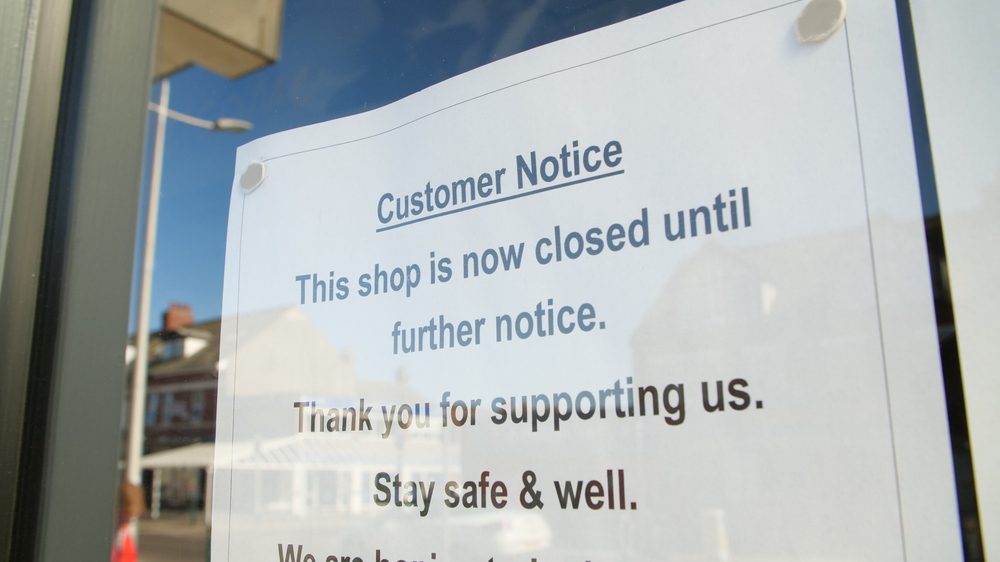
Red Lobster went bankrupt. TGI Fridays went bankrupt. Denny's just sold itself off.
Now Wendy's is closing 300 locations and Papa John's is right behind them.
There's a reason this is happening all at once – and the people responsible have already moved on.
Why Casual Dining Restaurants Are Closing Across America
Mollie Engelhart built mid-priced, casual sit-down restaurants in California. She watched it happen in real time.
The customer who used to come to her kind of place started ordering at the counter. The counter customer started hitting the drive-through. The drive-through crowd started cooking at home. Every rung of the ladder took one step down.
Nobody came from the top to fill the gap. Fine dining kept its clientele. The middle just disappeared.
Engelhart closed her last two California restaurants in 2025 – including a flagship she never wanted to close, one that was still technically profitable when she walked away. Her landlord demanded a steep rent increase and a new personal guarantee after ten years of never missing a payment. She called his bluff. He blinked too late.
"By then, it was too late," she wrote. That's how most of these stories end – not with a dramatic collapse, but with a decision point nobody wins.
She thought it was a California story. It wasn't.
Wendy's, Denny's, Papa John's: The 2026 Restaurant Closure List Keeps Growing
When inflation hollows out small independent restaurants, it's easy to tell yourself the weak ones are just failing.
When Wendy's announces 300 closures, Papa John's shuts down locations by the hundreds, Denny's sells itself off, and Black Box Intelligence projects 9% of all full-service restaurants will close in 2026 – that's a system under strain, not individual businesses stumbling.
Twenty restaurant companies filed for Chapter 11 in 2024 – the most since the height of COVID. The list reads like a tour of American strip malls: TGI Fridays. Red Lobster. Hooters. Pinstripes.
Traffic to restaurants open at least a year fell every single month in 2025 except one. First-half 2025 sales growth was one of the weakest six-month stretches in a decade – weaker, in some measures, than during the pandemic lockdowns when restaurants were literally closed by government order.
McDonald's CFO told investors that low-income customers are now skipping meals outright or trading down to eating at home. Not trading down to a cheaper menu item. Skipping meals.
In 2025, the United States saw a net loss of roughly 9,500 restaurants. When you account for new openings, that means closer to 15,000 closures in a single year – the vast majority of them independent, family-run establishments.
The Real Reason So Many Restaurants Are Closing
The cost structure is breaking down from every direction simultaneously.
Regulation, labor, ingredient costs, and debt are all stacking in ways that make it increasingly difficult to run any viable food business. Not just in California. Everywhere.
Lease terms have gotten brutal. Ingredient costs remain elevated. And the customers who kept these places alive are now making hard choices at the grocery store instead of the restaurant booth.
Black Box Intelligence classified 9% of full-service restaurants as "at risk" for 2026 – meaning they lost more than 30% of their peak sales in 2025. For the 3% that lost more than half their peak sales, Black Box's VP of insights said the question for 2026 is no longer if they close, but when.
What Happens to Families and Communities When Local Restaurants Close
Behind every closed location is a number that never shows up in the economic data.
The owner who built something from nothing. The staff who lost shifts. The neighborhood that lost a gathering place. When 15,000 independent restaurants close in a single year, that's not churn. That's destruction.
Engelhart put it plainly: "Behind every restaurant that closes is not just a failed business. It is a family that lost its livelihood, employees who lost their jobs, and a community that lost a gathering place."
Wall Street tracks the S&P. Washington tracks job creation. Newsom will run for president on California's economic record. None of that registers a dark storefront on a strip mall that used to smell like something good.
Ninety thousand restaurants have closed since 2020. The ones that survived are still fighting higher ingredient costs, higher labor costs, and customers who have permanently recalibrated what they're willing to spend.
This isn't a recovery story. It's a restructuring – and the people being restructured out of existence built the places where America used to eat.
Sources:
- Mollie Engelhart, "The Quiet Collapse of the American Restaurant," The Epoch Times, March 25, 2026.
- Fox Business, "Jack in the Box Shut Down More Than 70 Stores," December 2025.
- FSR Magazine, "Nine Percent of Full-Service Restaurants at Risk of Closing in 2026," March 2026.
- Restaurant Business Online, "Expect More of the Same in 2026," January 2026.
- Black Box Intelligence, industry traffic data, 2025.


