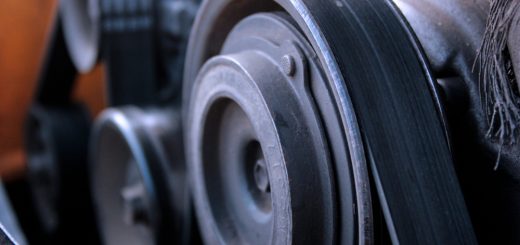
A Chevy Teardown Just Proved What Ford Owners Already Learned the Hard Way
A YouTube mechanic found a Chevy engine's timing belt shredded to pieces at only 85,000 miles.
General Motors just became the second automaker caught with a timing belt that destroys engines early.
Ford owners already know exactly how this story for Chevy owners is going to end.
Why GM Put a Timing Belt Inside a Bath of Hot Oil
The engine belongs to GM's 1.2-liter three-cylinder turbo, badged internally as the LIH, built into the Chevrolet Trailblazer, the Chevrolet Trax, the Buick Encore, and the Buick Envista.
Instead of a standard timing chain or a dry external belt, GM engineers submerged the timing belt directly in engine oil.
The idea is simpler manufacturing and a quieter engine, and it works right up until the belt itself starts breaking down.
A mechanic who goes by Eric on the YouTube channel I Do Cars tore down one of these engines and found the belt chewed up and barely holding together after just 85,000 miles.
GM recommends replacing that belt every 150,000 miles.
Fiber debris from the disintegrating belt did not just vanish, it clogged the oil pickup tube, passed through the strainer, and choked off oil pressure to the valves, pistons, and cams.
An engine starved of oil pressure does not slow down gently, it seizes.
Federal Investigators Already Mapped Out This Exact Failure On Ford's Engine
This is not GM's first rodeo with a design like this, because Ford built the same kind of belt into its 1.0-liter EcoBoost three-cylinder engine years earlier.
The National Highway Traffic Safety Administration opened a formal engineering analysis into that Ford engine and closed it with a finding that reads almost exactly like the Chevy teardown, the timing belt material degrades and creates debris that clogs the mesh oil pump pickup screen.
Federal investigators logged 355 reports of engine failure on Ford's one-liter EcoBoost, with the average failure striking at around 70,000 miles.
Ninety-eight percent of those failures hit before drivers ever reached the 150,000-mile replacement interval Ford had printed in the manual.
Ford eventually cut its recommended service interval down to six years or 100,000 miles, well after investigators tied the failure pattern to roughly 135,000 of these engines sold in the US.
Ford also issued a separate 2023 recall covering the belt tensioner on 2016 through 2018 Focus and 2018 through 2022 EcoSport models, and nothing about the Chevy teardown suggests GM and Buick owners will get off easier.
A California Lawsuit Says GM Already Knew
A class action lawsuit filed in California this year accuses General Motors of knowing about a defect capable of causing catastrophic engine failure and selling the cars anyway.
The lead plaintiff's engine reportedly failed at just over 11,000 miles, a small fraction of the 150,000-mile interval GM tells owners to trust.
Neither GM nor Ford designed these engines to fail, they designed them to hit government fuel economy targets with three cylinders instead of four or six.
Pete Buttigieg's Mileage Rules Are the Reason These Engines Exist
Transportation Secretary Pete Buttigieg defended ever-tighter fuel economy targets throughout his four years in office, even as automakers warned that squeezing more miles per gallon out of smaller engines meant squeezing out reliability too.
The U.S. Department of Transportation now calls those targets the Biden-Buttigieg standards, and says they went further than Congress ever required.
On September 28, 2026, Trump's Transportation Secretary Sean Duffy finalized a rule tearing those standards down, and he did not mince words about why.
"Thanks to President Trump's leadership, we have finally ended the illegal mandate that forced automakers," Duffy said, framing the rollback as a return to cars Americans can actually afford.
NHTSA now projects a fleet average of 34.9 miles per gallon by model year 2031, a far gentler climb than automakers were racing toward under the old rule.
Ford's one-liter EcoBoost and GM's 1.2-liter three-cylinder were both designed years before that rollback, back when Washington was still demanding engines shrink no matter what it cost in durability.
Sean Duffy Just Killed the Mandate That Built This Mess
A fuel economy rule written in Washington does not show up on a window sticker, it shows up eighty-five thousand miles later as a check engine light and a repair bill nobody budgeted for.
Ford already handed federal investigators the receipts on this exact failure, and GM built essentially the same belt into four different vehicles anyway, years into a regulatory push that never once asked whether the engines would survive.
The next driver who gets stranded on the highway will not be thinking about Pete Buttigieg's fuel economy targets, they will be thinking about the tow truck.
Detroit chased a federal mileage number for the better part of a decade and handed American drivers an engine that chews itself apart from the inside, and the lawsuits now piling up suggest the automakers knew exactly what they were building.
Trump's Transportation Department has already ended the mandate that pushed Detroit into this corner, but it will not refund a single dollar to owners stuck replacing engines that failed doing exactly what Washington demanded of them.
Sources:
- Silvian Secara, "Chevy's Tiny Three-Cylinder Engine Teardown Reveals an Infuriating Belt Problem," CarBuzz, November 22, 2026.
- National Highway Traffic Safety Administration, "Engineering Analysis EA26004," National Highway Traffic Safety Administration, 2026.
- Thomas Hundal, "The Feds Want to Know Why Ford's One-Liter EcoBoost Wet-Belt Engine Keeps Failing Catastrophically," The Autopian, August 4, 2026.
- U.S. Department of Transportation, "President Trump, Transportation Secretary Duffy Finalize Freedom Means Affordable Cars," U.S. Department of Transportation, September 28, 2026.