
JD Vance Gets Presidential Welcome in Islamabad as March Inflation Report Points Confirms Toll on American Pockets
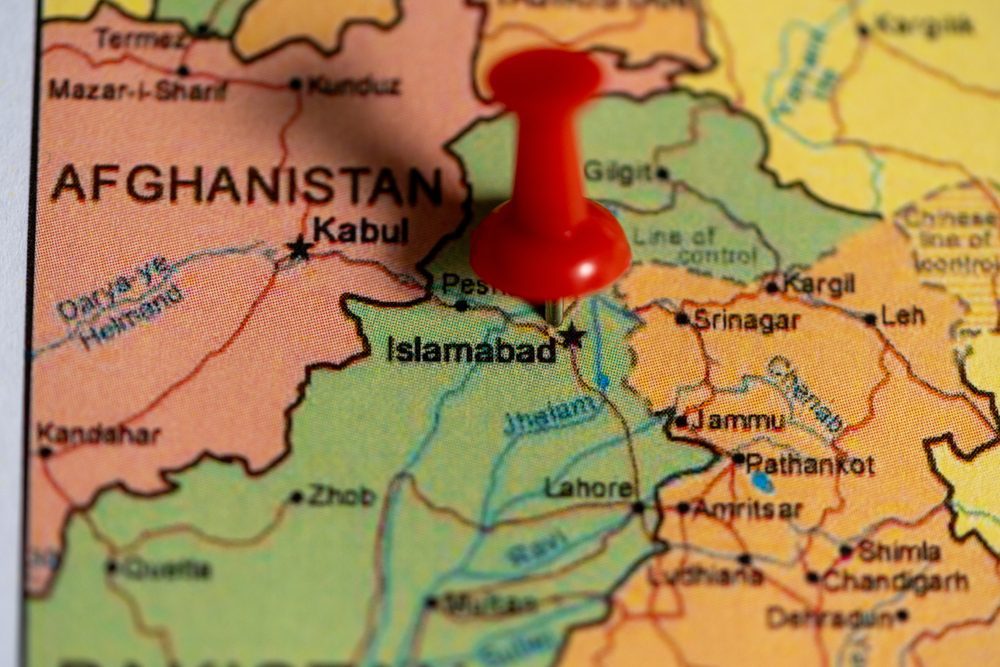
JD Vance stepped off Air Force Two in Islamabad for the highest-stakes negotiation America has attempted in 47 years.
Vance got a fighter jet escort, Pakistan's foreign minister and army chief met him on the tarmac – full military honors, streets locked down for miles.
Whether he walks out with a deal or empty hands will determine what you pay for gas, groceries, and your mortgage for the rest of 2026.
Vance Arrives As March Inflation Report Confirms Largest Energy Shock Since the 1970s Is Roiling America
Special envoy Steve Witkoff and Jared Kushner – the same team that delivered the Gaza framework and pushed Ukraine toward the table – landed in Islamabad.
But this time, Vice President JD Vance is in the room alongside them.
Trump dispatched his full diplomatic firepower to get this done.
And Vance is getting the full presidential treatment from the nuclear-armed Islamic nation hosting the Iranian-American peace talks.
Pakistan shut down its capital to make the talks happen. A three-kilometer red zone was established around the Serena Hotel, all guests evacuated, and Pakistani Rangers lined every approach road in the city.
This is the first direct face-to-face meeting between the United States and Iran at this level since the 1979 Islamic Revolution.
Vance told reporters before departure he expected talks to be positive.
Iran's parliamentary speaker said his country was approaching the weekend with goodwill and readiness to reach a deal.
The question is what Trump is willing to walk away from to get American families off the hook for a war that's hitting them at the pump every single day and that it is now widely-believed America was dragged into at the urging of foreign allies.
America's Best Shot at Ending the Energy Crisis – Confronting Who Is Really Keeping Bills High
The Bureau of Labor Statistics dropped the March Consumer Price Index report Friday morning, and the headline number tells the story plainly: prices rose 0.9% in a single month and are now 3.3% higher than a year ago.
That monthly spike is the largest since June 2022 – the peak of the Biden inflation disaster.
Energy drove the whole thing.
Gasoline prices surged 21.2% in March alone, the largest single-month jump in records going back to 1967.
That's not a data anomaly.
That's what happens when a government situated on the geo-politically strategic Strait of Hormuz – the narrow waterway that carries 20% of the world's oil and 25% of its liquefied natural gas – that had kept it open for decades, delivers its logical response to getting attacked.
Operation Epic Fury launched February 28 when the U.S. and Israel struck Iranian nuclear sites and military infrastructure, killing Supreme Leader Ali Khamenei.
Iran's retaliation went well beyond symbolic strikes: Revolutionary Guards reportedly mined the shipping lanes, launched more than 20 attacks on merchant vessels, and issued warnings that any ship attempting transit would be set ablaze.
Commercial tanker traffic through the strait collapsed almost overnight.
Brent crude surged past $120 a barrel as Gulf oil producers – Iraq and Kuwait first among them – began shutting in wells because storage filled faster than anyone could move product.
The International Energy Agency called it the "largest supply disruption in the history of the global oil market."
Powell Is Watching and Waiting
Here is what makes this worse for ordinary Americans: the Federal Reserve is paralyzed.
Jerome Powell went to Harvard at the end of March and told students the Fed's instinct is to "look through" supply shocks.
Translation: he's not cutting rates, and he's not raising them either.
Traders have scrapped their expectations for any rate cuts in 2026.
Bond markets are pricing in a 77% probability the Fed's benchmark rate stays exactly where it is through December.
The 30-year mortgage rate already climbed to 6.38% in late March.
Fed minutes released this week show some policymakers openly discussed whether rate hikes could become "appropriate" – the first serious talk of tightening since the post-pandemic inflation peak.
American families aren't living through an economics seminar.
They filled up the gas tank at $4 a gallon in March and watched grocery prices for beef jump 12.1% from a year ago.
The egg price relief from the avian flu crash was real – prices down 44.7% annually – but that's the one bright spot in an otherwise punishing report.
Food at restaurants rose 3.8% from last year, suggesting Americans are already eating out less as budgets tighten.
The Ceasefire That Was Sabotaged From the Start
Here's what the financial press is burying in the fine print.
Iran and the U.S. agreed to a ceasefire April 8.
By April 9 – the day before this inflation report – the Strait of Hormuz was effectively closed again after airstrikes on civilian neighborhoods in Lebanon came mere hours after the ceasefire was announced.
These weren’t U.S. Strikes.
And in many Americans’ eyes they were timed specifically to keep our country embroiled in a regional war that harms our own interests.
https://x.com/Joyce_Karam/status/2041913570372301139“>https://x.com/Joyce_Karam/status/2041913570372301139
Smoothing that over is perhaps the biggest hurdle for Vice President Vance today in Islamabad.
Abu Dhabi National Oil Company CEO Sultan Al Jaber confirmed most western tanker traffic is still being blocked, although Iran has begun to let some traffic get through.
Core inflation – which strips out food and energy – came in at 0.2% for the month, slightly cooler than expected.
Economists at Wells Fargo and Deutsche Bank noted that the war hasn't yet pushed costs into non-fuel categories, but they won't stay insulated for long.
Fertilizer shortages, rising transportation surcharges, and higher airline fares are all moving through the supply chain now and will show up in April and May data.
Your gas bill is a war bill – and the foreign power seemingly most responsible for keeping it that way is hellbent on making sure nothing changes.
But they aren’t officially at the negotiating table today in Islamabad.
Sources:
- Eric Revell, "Inflation Surged in March as Iran War's Energy Impact Hit Consumers," Fox Business, April 10, 2026.
- "March Inflation Soars, Confirming Iran War Price Shock," Axios, April 10, 2026.
- "2026 Strait of Hormuz Crisis," Wikipedia, updated April 10, 2026.
- "Economic Impact of the 2026 Iran War," Wikipedia, updated April 10, 2026.
- "Fed Minutes Show Divide Over Iran War Inflation, Rate Cuts," Quartz, April 8, 2026.
- "Powell Sees Inflation Outlook in Check, No Need to Hike Rates Because of Oil Shock," CNBC, March 30, 2026.
- "Fed Votes to Hold Rates Steady, Notes Uncertain Impacts from Iran War," CNBC, March 18, 2026.


