Yellowstone Just Erupted While Americans Were Getting Ready for Christmas
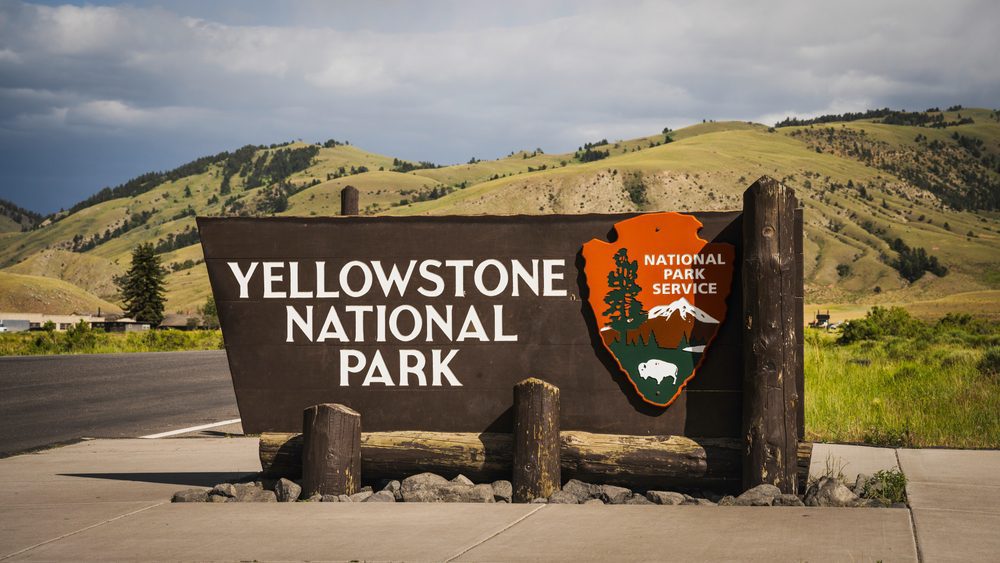
Some Americans woke up expecting another quiet winter day.
Instead, they got a harsh reminder that the earth beneath their feet is far from stable.
And Yellowstone just erupted while Americans were getting ready for Christmas.
Hot Mud Explodes From Black Diamond Pool as Cameras Roll
At 9:23 AM on December 21st, the first day of winter, Black Diamond Pool in Yellowstone's Biscuit Basin suddenly exploded without warning.
"Kablooey!" was how U.S. Geological Survey experts described the muddy eruption that sent hot mud spraying 40 feet into the air.¹
The blast was captured on webcam by the Yellowstone Volcano Observatory, giving Americans a front-row seat to the raw power hiding beneath one of the nation's most beloved national parks.
This wasn't some gentle geyser show for tourists.
The "dirty eruption" hurled scalding mud and debris high into the winter air while the surrounding landscape lay covered in snow.
No visitors were hurt because the area had been closed to the public since July 2024, when a much larger explosion at the same pool destroyed wooden boardwalks and sent beach ball-sized rocks flying hundreds of feet.
The latest eruption was just the newest in a series of increasingly frequent outbursts from this unstable thermal feature.
Since the July explosion that damaged park infrastructure, Black Diamond Pool has been producing what scientists call "dirty eruptions" reaching up to 40 feet high on a sporadic basis.²
https://twitter.com/USGSVolcanoes/status/2002460748828557702
Yellowstone Sits Atop America's Greatest Natural Threat
Most Americans don't realize they're living above the continent's most dangerous geological time bomb.
The entire Yellowstone basin sits on top of a massive supervolcano – a gigantic volcanic caldera perched over a colossal magma reservoir that dwarfs anything else on earth.
This isn't some distant theoretical threat.
Yellowstone has produced three catastrophic, civilization-ending eruptions in the past 2.1 million years.
The first eruption, about 2.1 million years ago, created what scientists call the Huckleberry Ridge Tuff, covering 1.3 million square miles with volcanic ash from the Pacific Ocean to Iowa and Texas.
That single blast was over 6,000 times more powerful than Mount St. Helens.
The second major eruption 1.3 million years ago produced the Mesa Falls Tuff, still 700 times bigger than Mount St. Helens despite being smaller than the first.
The most recent supervolcano eruption occurred 640,000 years ago, creating the Lava Creek Tuff that buried 1.5 million square miles under ash and was 2,500 times more powerful than Mount St. Helens.
Scientists can only estimate the devastation such an eruption would cause today.
Ash would fall for thousands of miles, turning much of the American heartland into an uninhabitable wasteland while triggering global climate change that could last decades.
The Saturday mud eruption serves as a stark reminder that this geological monster is far from dead.
Yellowstone preserves more than 10,000 hydrothermal features within the park, including over 500 active geysers – the largest collection of such features anywhere on earth.³
All of this intense thermal activity exists because of the massive magma chamber churning just beneath the surface.
While scientists say the annual probability of a major volcanic eruption at Yellowstone remains around 0.001 percent, they also acknowledge that recent research has identified four distinct magma bodies beneath the park.⁴
The Black Diamond Pool eruptions show that the system remains highly active and unpredictable, even in areas previously considered stable.
America's most beautiful national park conceals the nation's greatest existential threat, and Saturday's mud blast proved that threat is very much alive.
¹ "Kablooey!" That's the word U.S. Geological Survey volcanic experts used," Associated Press, December 21, 2025.
² U.S. Geological Survey, "Black Diamond Pool eruptions reaching up to 40 feet," December 2025.
³ "Park officials say Yellowstone preserves the most extraordinary collection of hot springs, geysers, mud pots and fumaroles on Earth. More than 10,000 hydrothermal features," National Park Service, 2025.
⁴ Ninfa Bennington, U.S. Geological Survey, "Four distinct magma bodies beneath Yellowstone," February 2025.