ExxonMobil Signs Preliminary Venezuela Return Deal Nearly Two Decades After Nationalization
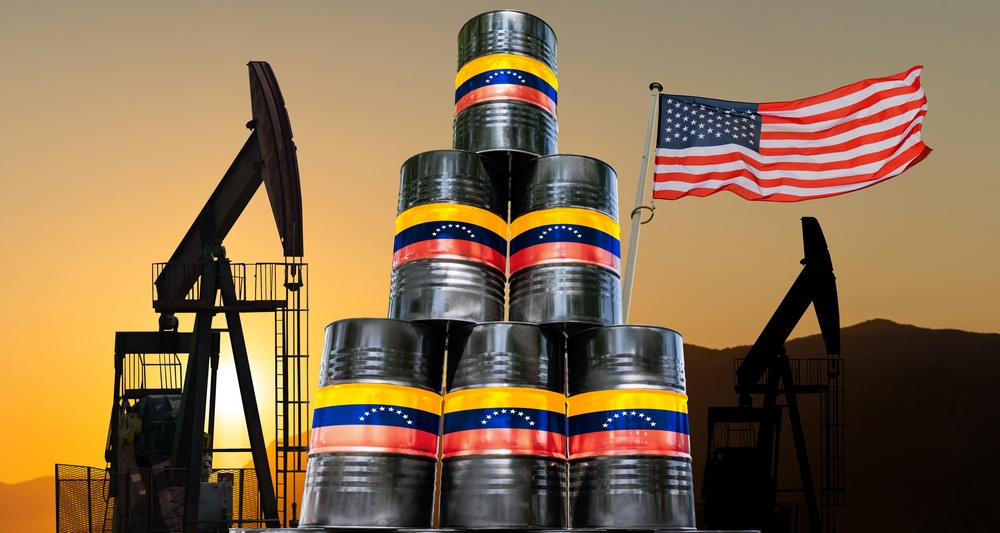
ExxonMobil has signed a preliminary agreement with PDVSA, Venezuela's state oil company, to evaluate a return to the country's oil fields.
The memorandum, signed last week, marks a potential step toward reversing a nearly 20-year absence that began when Venezuela nationalized the company's assets.
Exxon described the agreement as "a meaningful first step," while cautioning that any further investment would depend on stable government policy and competitive returns.
A Nationalization Reversed
The Wall Street Journal reported in September that Exxon had been evaluating fields holding more than 50 billion barrels of oil.
Venezuela holds more than 300 billion barrels of proven oil reserves, among the largest totals of any country and nearly four times the reserves held by the United States.
Exxon's presence in Venezuela ended in 2007, when then-President Hugo Chavez nationalized foreign-owned oil projects in the country.
Exxon did not continue operating under the new terms.
The company pursued international arbitration afterward, winning a $1.6 billion award in 2014 that was later reduced, along with smaller awards in subsequent years.
A separate 2023 arbitration panel awarded Exxon just $77 million of a $1.4 billion claim.
Venezuela contested and delayed much of that payment throughout the process.
In January 2026, at a White House reception, Exxon CEO Darren Woods described Venezuela as "uninvestable."
Woods said the company's assets had been seized twice before, and that a third attempt would require substantive changes in the country's investment climate.
A New Government
Venezuela's political landscape shifted substantially this year.
Nicolás Maduro was removed from power in January 2026 following action by the Trump administration, which has said it was responsible for his removal.
Delcy Rodríguez, a senior official under Maduro for years, was installed as interim president with the backing of the Trump administration.
This summer, Rodríguez's government signed a package of oil-sector reform laws giving private companies majority control over oil production operations, with PDVSA retaining a minority stake.
That reverses the state-controlled model Venezuela had followed for years.
Rodríguez has not uniformly embraced U.S. involvement.
In a parliamentary address earlier this year, she said "the energy greed of the North" had brought Venezuela "tremendous problems."
She also dismissed Washington's stated justifications for removing Maduro, citing drug trafficking and democracy concerns, as "excuses."
Rodríguez has said Venezuela remains open to energy deals "where all parties benefit."
Venezuela's opposition leader, María Corina Machado, who was awarded the Nobel Peace Prize for her pro-democracy organizing, was not installed as head of the transitional government.
Machado has said publicly that durable oil investment in Venezuela requires a stable, democratic government, not simply a change in personnel.
Rodríguez addressed the oil reforms at an industry conference in Caracas on November 3.
Exxon representatives discussed the country's energy sector at an exhibition in Abu Dhabi the day before, on November 2.
Washington's Involvement
Interior Secretary Doug Burgum traveled to Caracas in March, meeting with Rodríguez and with oil executives from Chevron and Shell.
Burgum described the relationship as moving at "Trump speed" and said expanded energy ties would help keep U.S. energy prices down.
During the same trip, Shell signed a memorandum of understanding to begin liquefied natural gas production at Venezuela's Dragon gas field.
The Trump administration has said it completed an initial sale of Venezuelan oil worth $500 million earlier in 2026.
Trump has separately said interim Venezuelan authorities agreed to turn over between 30 million and 50 million barrels of sanctioned oil to the United States, worth roughly $2.8 billion at the time.
Industry Context
Chevron, which has operated in Venezuela for more than a century under a series of U.S. sanctions waivers, has said it plans to double its Venezuelan oil production over the next five years.
U.S. crude imports from Venezuela reached their highest level since 2017 in July 2026, according to the U.S. Energy Information Administration.
Exxon has not announced a timeline for any further investment decision.
The company describes its current agreement with PDVSA as preliminary.
Sources:
- David Zimmermann, "Exxon Negotiating Deal to Pump Oil in Venezuela After Standoff With Leaders," Washington Examiner, May 21, 2026.
- "ExxonMobil Signs Preliminary Agreement Toward Return to Venezuela," Breitbart, November 10, 2026.
- "Exxon Signs a Preliminary Agreement With Venezuela's PDVSA to Assess a Return, 19 Years After Its Assets Were Seized," mlq.ai, November 10, 2026.
- "Trump Claims 'Historic' Venezuela Oil Deal After Maduro Arrest," Military.com, January 20, 2026.
- U.S. Energy Information Administration, "Petroleum Supply Monthly," U.S. Energy Information Administration, 2026.
- "Burgum Says US-Venezuela Ties Moving at 'Trump Speed,' Will Help Keep Energy Costs Down for Americans," Fox Business, March 5, 2026.
- "'It's the Energy Greed of North': Venezuela's Interim President Slams US for Drugs, Democracy Falsehoods," WION, January 8, 2026.