
A Billion Dollar Iran War Bet the White House Quietly Warned Staff About Now Has the Trump DOJ Probing
Someone made $500 million betting on Trump's Iran decision fifteen minutes before Trump announced it.
The next morning, the White House sent every staffer an urgent email about insider trading.
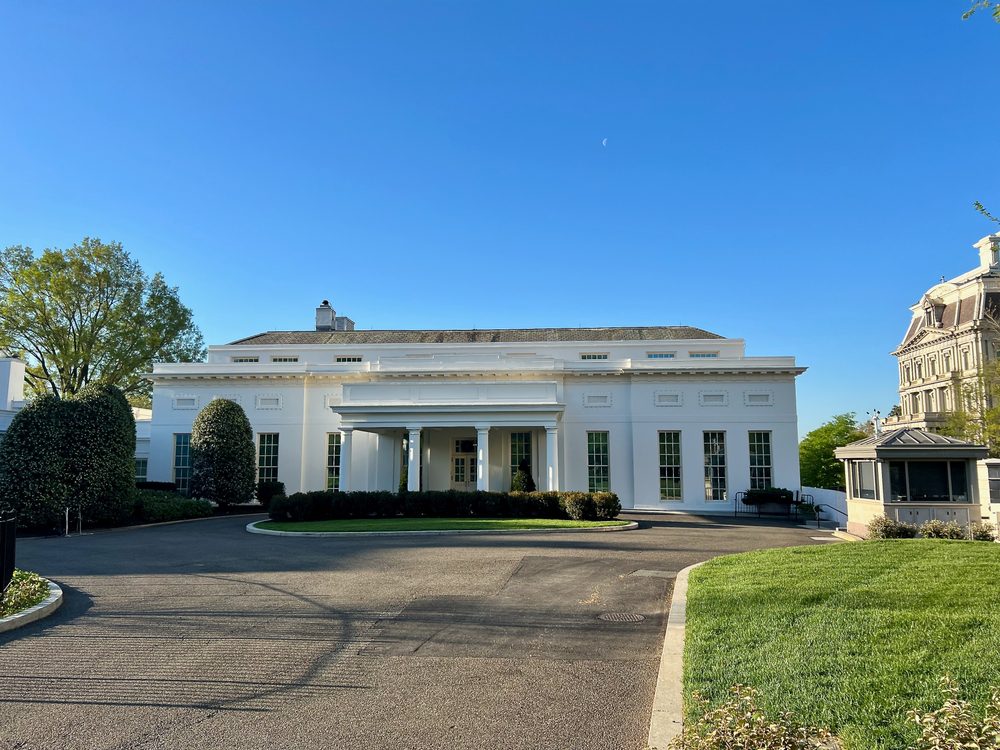
Now the DOJ is hunting over two and a half billion dollars in war profits – and the trail starts inside the building that sent that memo.
Four Trades Too Perfect to Be Coincidence
The London Stock Exchange Group captured the data. Every trade tells the same story.
On March 23, with no public indication that Trump was pulling back on planned strikes against Iran's power grid, someone dropped $500 million betting oil prices would fall.
Fifteen minutes later, Trump posted to Truth Social that he was delaying the attacks.
Oil cratered. The bet paid out.
On April 7, traders placed $960 million on falling oil prices – hours before Trump announced a temporary ceasefire that nobody outside the negotiating room knew was coming.
On April 17, twenty minutes before Iran announced the Strait of Hormuz would reopen, $760 million in short bets hit the market.
On April 21, fifteen minutes before Trump extended the ceasefire, $430 million more went in on declining prices.
A combined $2.6 billion wagered on information that, by any reasonable definition, could only have come from inside the room where these decisions were made.
The White House Already Knew Something Was Wrong
Here's what nobody is talking about loudly enough.
The morning after the first suspicious trade – March 24, one day after that $500 million bet – the White House Management Office sent a staff-wide email.
The memo named Kalshi and Polymarket by name. It reminded every White House employee that using nonpublic information to trade is a criminal offense and a federal ethics violation. "All White House employees are reminded that the misuse of nonpublic information by government employees for financial benefit is a very serious offense and will not be tolerated," the email read.
The White House sent that warning the morning after the very first trade now under federal investigation.
They didn't send it after a policy review. They didn't send it after a congressional hearing. They sent it the day after $500 million moved in a fifteen-minute window before a classified decision went public.
That memo is an administration that already suspected someone in its orbit crossed a line.
This Is What $2.6 Billion in Stolen Intelligence Looks Like
The DOJ and CFTC are now demanding trading records from the CME and ICE exchanges – the kind of subpoenas that strip away the anonymity of every account that touched these positions.
CFTC Chairman Michael Selig has already gone on record: "We will find you, and you will face the full force of the law."
The trades weren't subtle. On the morning of March 23, volume on the oil short surged to roughly nine times the normal level for that hour. On April 7, newly created Polymarket accounts – accounts that didn't exist before the ceasefire bet – raked in hundreds of thousands of dollars hours before Trump posted the announcement, even as the president was publicly threatening to destroy Iranian civilization.
No rational trader makes a $960 million bet on a ceasefire when the sitting president is threatening to "annihilate the Iranian civilization." No one bets $760 million on the Strait of Hormuz reopening unless they know it's opening.
Congressman Ritchie Torres put it plainly: "What kind of trader would make a massive trade at 6:49 a.m., fifteen minutes before a market-moving presidential announcement with billions of dollars at stake and without a hedge? The only plausible answer to that question is an insider trader. Any other alternative is a statistical impossibility."
The same pattern showed up before Trump's tariff pause last year. Before the Venezuela action. Now four times across the Iran war.
Think about what that actually means. Someone with access to America's most sensitive military and diplomatic communications – someone sitting in meetings where troop movements and ceasefire terms were decided – walked out of those rooms and used what they heard to get rich. American pilots were flying missions. Sailors were running the Strait. And somebody in their chain of command was already on the phone to a broker.
DOJ has the subpoenas out. The trading records are coming. Whoever thought a prediction market account and a futures position were clever enough to hide behind is about to find out what "full force of the law" actually looks like.
Sources:
- Jack Davis, "DOJ Investigating Suspicious Iran War Oil Trading Trend: Report," Western Journal, May 7, 2026.
- Katherine Faulders and Alexander Mallin, "DOJ probing $2.6 billion in oil trades related to Iran war, sources say," ABC News, May 7, 2026.
- "White House privately warned staff against insider trading after mystery billion-dollar oil bet during Iran war," The Hill, April 10, 2026.
- "White House warned staff against Iran war bets on prediction markets," CNBC, April 10, 2026.
- Garrett Down, "House Dem Sam Liccardo probes suspicious oil trades during Iran war," CNBC, April 17, 2026.


