
Trump Found the Hidden Tax Washington Has Collected on Your Heating Bill Since 1920
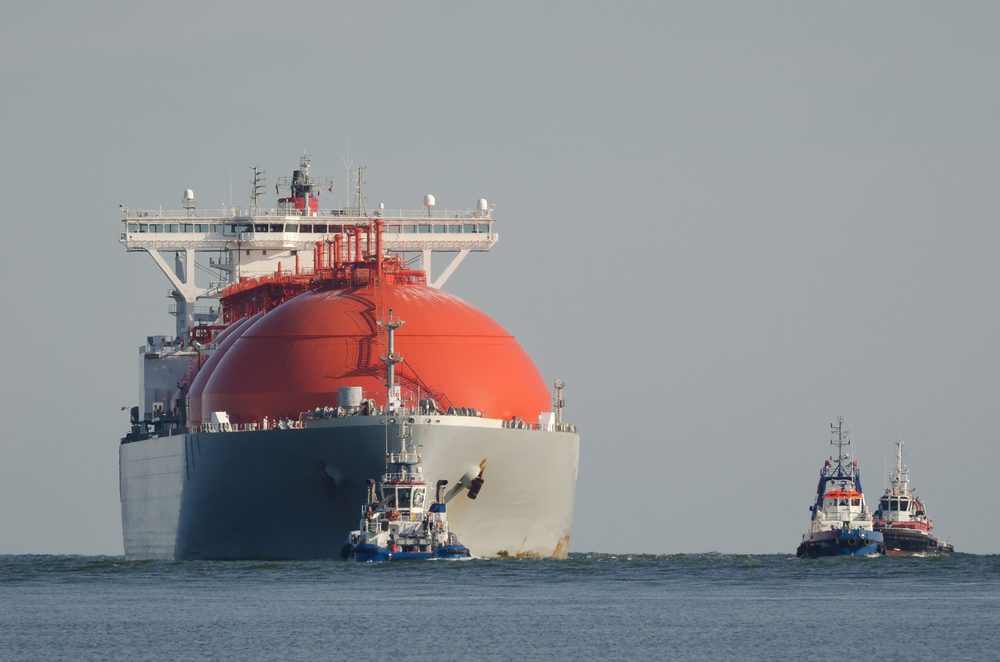
Alaska villages were already paying over $17 a gallon for heating fuel before Iran closed the strait.
Then the Strait of Hormuz shut down, gas prices spiked by the day, and a 100-year-old law nobody in Washington wanted to touch was making every gallon worse.
Trump touched it – and the numbers coming out of the White House are something the maritime lobby prayed you'd never see.
40 Tankers, 9 Million Barrels, Zero Coverage From the Media
On March 18, Trump signed a 60-day waiver of the Jones Act – a 1920 law that forces domestic shipping to use only American-built, American-flagged vessels.
The Jones Act fleet has fewer than 100 oceangoing ships.
That's it.
That bottleneck meant oil couldn't move freely between American ports even as U.S. energy production hit record highs during the Iran conflict.
Trump's waiver blew it open.
Since March 18, 40 foreign tankers have delivered or are delivering oil between U.S. ports – from California to Texas to Florida to Alaska.
The domestic fleet effectively grew by 70% overnight.
Foreign vessels under the waiver have moved 9 million barrels of American oil and counting.
In Alaska – where rural villages were already paying $17.50 a gallon for heating fuel before the war – the jet fuel delivered under the waiver equals roughly half the state's average monthly consumption.
White House officials confirmed the data to Axios on Wednesday, as the administration weighs extending the waiver past its mid-May expiration date.
The Racket That Ran for a Century While Washington Did Nothing
Woodrow Wilson signed the Jones Act in 1920 to protect American shipbuilders after World War I.
It never left.
For a hundred years, Americans in Alaska, Hawaii, and Puerto Rico paid a hidden surcharge on every gallon of gas, every bag of groceries, every tank of heating oil – because every good shipped between U.S. ports had to move on one of those fewer than 100 compliant vessels, at cartel prices, on cartel timelines.
One economist estimated the Jones Act has cost Puerto Rico's economy $17 billion over just the past two decades.
A 2023 study projected that permanently lifting the restriction could cut East Coast gas prices by up to 63 cents a gallon and diesel by up to 82 cents.
Washington knew all of this.
They did nothing – because the maritime lobby wrote checks and the law stayed on the books.
Bush waived it after Katrina. Trump waived it after Hurricane Maria in 2017. Every time there's a crisis bad enough that Washington can't ignore the suffering, the same law gets quietly suspended – because every politician in that building knows it's indefensible when ordinary Americans are paying the price.
Trump didn't wait for a hurricane this time.
He saw what the Iran conflict was doing to your pump price and moved in 35 days what Washington refused to touch for a century.
The Lobby Is Screaming – Which Means It's Working
A White House adviser told Axios the president wants to keep the waiver in place "as long as the Iranians are a threat and raising fuel prices."
White House Press Secretary Karoline Leavitt called the original waiver "just another step to mitigate the short-term disruptions to the oil market as the U.S. military continues meeting the objectives of Operation Epic Fury."
The maritime lobby came out swinging immediately.
The American Maritime Partnership called the waiver "dangerous to American workers" and warned it "displaces American companies."
That's what every protected racket says the moment competition shows up.
Here's what they're not telling you: American energy production hit record highs during Operation Epic Fury.
The domestic energy industry is not hurting – the shipping cartel is being forced to compete for the first time in a century.
The Jones Act lobby spent a hundred years convincing Washington this law protected American workers.
What it actually protected was a monopoly on your energy bill – one that hit hardest in the places least able to absorb it: rural Alaska, Puerto Rico, the island communities that had nowhere else to turn.
Trump ripped the mask off in 35 days.
The only question now is whether Washington lets it go back on.
Sources:
- "Scoop: Trump mulls Jones Act waiver extension to lessen Iran War oil shock," Axios, April 22, 2026.
- Karoline Leavitt, White House Press Secretary statement on Jones Act waiver, March 18, 2026.
- "Trump reshapes Middle East as expert predictions on Operation Epic Fury fail," Fox News, April 22, 2026.
- "A war-driven spike in fuel prices could produce a 'survival scenario' in Alaska villages," Alaska Beacon, April 15, 2026.
- Demian Brady and Atticus Vernacchio, "The Jones Act Paradox: Why is a Law that is Deemed 'Essential' So Frequently Waived?" National Taxpayers Union Foundation, July 19, 2023.


