
EU Official Just Admitted the New Car Camera Mandate Was Only the Opening Move
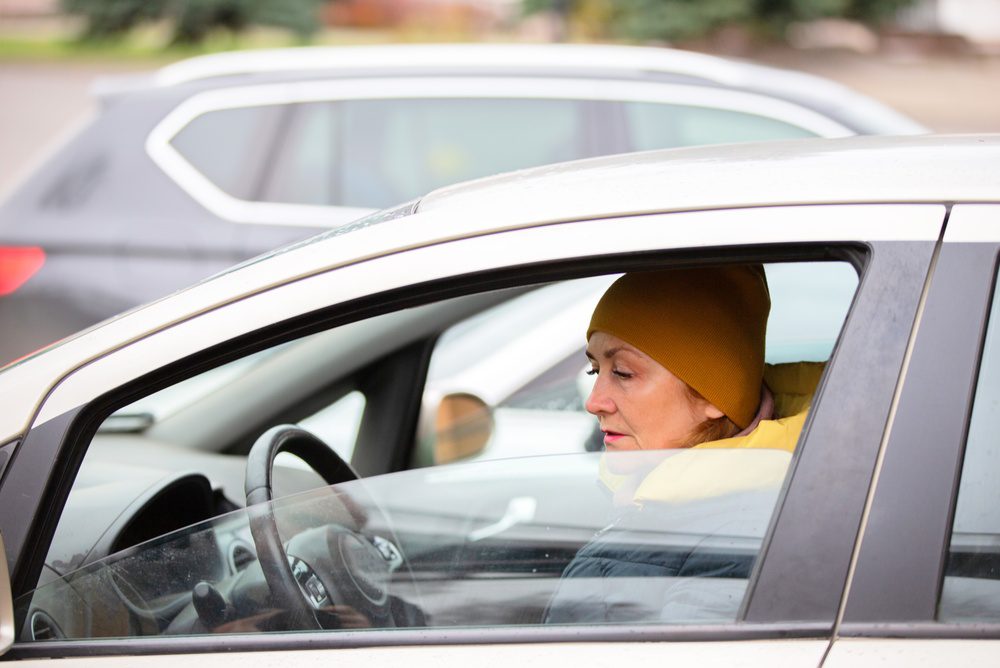
Texas Attorney General Ken Paxton caught General Motors selling drivers' private data to insurance companies without permission.
Europe just wrote a permanent version of that same control into law.
One EU official's own words confirm the camera mandate is only the opening move.
The Same Surveillance Fight Playing Out in Texas Just Became Mandatory in Europe
American drivers already know what it feels like to get spied on by their own vehicle.
Paxton sued General Motors in 2024 for collecting driving data on more than a million Texans and selling it to insurers without their knowledge.
GM got caught, got sued, and eventually got fined.
The European Union skipped the lawsuit entirely and wrote the camera into law instead.
Starting July 7, 2026, every newly registered car and van in the EU must come factory-equipped with a camera pointed directly at the driver.
The system is called an Advanced Driver Distraction Warning.
It tracks your eyes.
It tracks your head position.
It knows when you glance at your phone, your radio, or your own passenger for too long.
Look away too long and it hits you with a sound, a flash, or a vibration until your eyes snap back to the road.
The mandate does not stop there.
Automakers must also install an event data recorder – functionally a black box – that logs how the car was driven in the moments before a crash.
Alcohol interlock readiness is required too.
That lays the groundwork for a system that can stop your car from starting if you fail a breath test.
None of it is optional.
None of it can simply be unplugged.
Every system is required to switch itself back on the next time you start the engine, the same design already built into the 2024 speed mandate.
You can silence the beep for one drive.
You cannot opt out for good.
The Feature That Cannot Be Switched Off Has Already Failed Real World Tests
This did not come out of nowhere.
Brussels laid the first brick back in July 2024.
That's when it forced every new car in the EU to carry a speed assistance system that tracks GPS and camera data and beeps every time you go over the limit.
That system arrived branded as a harmless convenience with an easy override button.
It has not exactly performed as promised.
Independent testing from Thatcham Research found the worst-performing speed assistance system correctly caught speed limit changes only about three-quarters of the time on real roads.
Even the best system in the test still missed roughly one in ten changes.
Drivers stuck with a dashboard that lies to them roughly ten to twenty five percent of the time, and Brussels called it progress.
Now the bureaucrats want to build on that same shaky foundation with a camera nobody asked for, aimed at drivers who never agreed to be monitored.
Brussels Already Has the Next Move Planned for 2030
Here is the part that should worry you more than the beeping.
A Commission source told Britain's Daily Mail the current speed system "was always just an interim stage."
Officials are now pushing for a full satellite-enforced system.
It would automatically cut engine power the instant a car exceeds the posted limit.
No override button.
No accelerating past it.
Just Brussels, a satellite, and your gas pedal, all working against you at the same time.
Put the driver camera next to that admission and the pattern is impossible to miss.
First came the beep you could technically ignore.
Then came the camera watching your face that resets itself every time you start the car.
Next on the list, by the Commission's own admission, is a system that takes the decision to slow down out of your hands entirely.
Every step gets pitched as a small convenience, and every step hands Brussels a little more control over how fast you're allowed to move and how closely you're allowed to be watched while you do it.
American drivers should not assume this stays overseas.
European regulators have spent a decade pushing safety mandates that eventually show up in vehicles sold worldwide, because automakers build one platform instead of two.
The camera bolted above your steering wheel today in Warsaw is the same camera your local dealership could be advertising as a "feature" in a few years.
Brussels did not ask permission to put a camera on 450 million people behind the wheel, and it will not ask permission before it reaches for the satellite either.
Sources:
- Attorney General Ken Paxton, "Attorney General Ken Paxton Sues General Motors for Unlawfully Collecting Drivers' Private Data," Office of the Texas Attorney General, August 2024.
- C. Douglas Golden, "Alert: Gov't Org Mandates Cameras That Can't Be Turned Off in New Cars – Will Monitor Driver's Eyes, Head Position, and Attention," The Western Journal, July 9, 2026.
- European Commission, "Safer Cars, Safer Roads: New Rules Take Effect," europa.eu, July 8, 2026.
- "The EU Wants To Use Satellites To Automatically Prevent Your Car From Speeding: Report," InsideEVs, July 2026.
- "The EU (Still) Wants to Control Your Speed Via Satellite," The Drive, July 2026.


